DIY Fizzy Marbled Easter Eggs — Easy Baking Soda & Vinegar Craft
Fizzy Easter Eggs are a playful, hands-on craft that creates colorful marbled eggs using a baking-soda “paint” and a splash of vinegar to activate the fizz. This simple project produces unique, soft-marble finishes on hard‑boiled eggs and is great for Easter decorating with kids or as a seasonal craft activity.
Below are materials, step‑by‑step instructions, and photos to guide you through making your own fizzy marbled eggs.
Materials:
Baking soda
Food colouring (multiple colours)
Hard boiled eggs
White vinegar
Equipment:
Small bowls (or paint palette)
Measuring spoon
Popsicle stick (or spoon, for stirring)
Paintbrush
Instructions:
Step 1: Gather your supplies
Collect baking soda, food colouring, hard‑boiled eggs, white vinegar, small bowls or a deep paint palette, a popsicle stick or spoon for stirring, and a paintbrush. Wearing disposable nitrile gloves is recommended to avoid dyeing your fingers.

Step 2: Prepare the colouring "paint"
Add 1 tablespoon of baking soda to a small bowl or one section of a deep paint palette. Repeat for each colour you plan to use.

Add 1 tablespoon of water to each bowl so you have an approximately 1:1 ratio of baking soda to water.

Add about 6 drops of food colouring to each bowl (use a few extra drops for lighter colours). Stir each mixture until the baking soda is suspended in the tinted water.

Use a clean popsicle stick or spoon to mix each colour thoroughly until you have a sandy, paint‑like consistency.

Step 3: Paint the eggs
Hold a hard‑boiled egg over a clean bowl. Using a paintbrush, pick up the baking soda paint and dab it onto the egg surface. Try to get some of the thicker, sandy part of the paint rather than only the coloured liquid. For a marbled look, apply the same colour to multiple spots around the egg and layer different colours.

Continue adding colours and layering across the egg until you’re happy with the design.


Step 4: Add vinegar to fizz and reveal the marbling
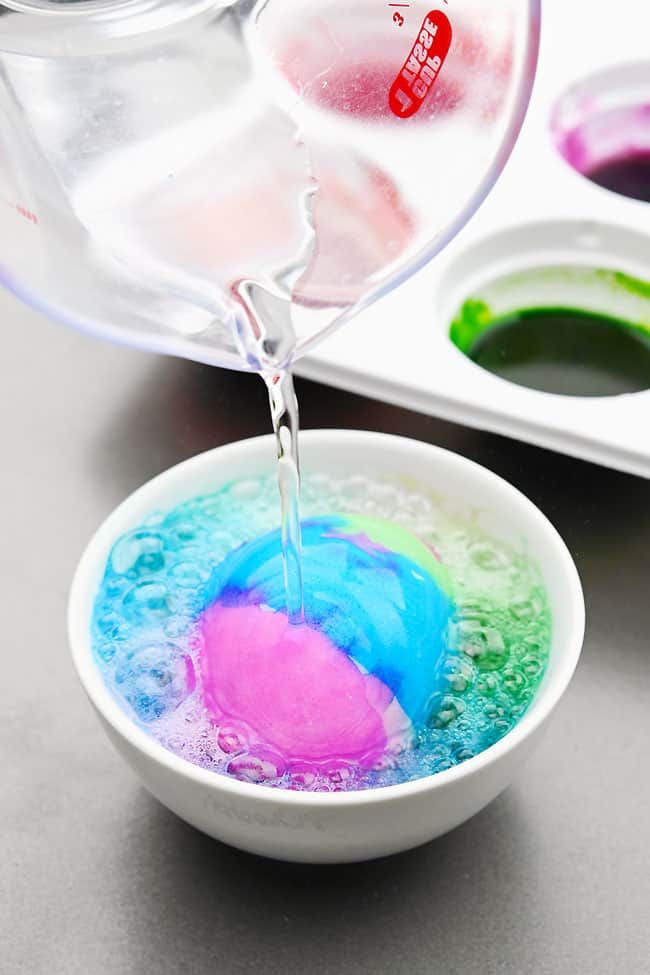
Set the painted egg in an empty bowl and slowly pour white vinegar over it. Pour gently so the fizzing reaction doesn’t overflow the bowl. The bubbling reaction will help blend the colours and reveal a soft marbled pattern.

Once fizzing settles, the marbled pattern will be visible. Rinse the egg under cold water to remove any remaining baking soda paint residue.


Your fizzy Easter egg is complete — each one will have a unique look!

Helpful Tips:
Do not leave the egg sitting in the vinegar after fizzing has stopped. Extended contact can dye the area of the egg touching the vinegar (often resulting in a brownish tint depending on your colours).
Be generous with food colouring in the bowls — the colours will appear paler when applied to the egg. If the colours are too light, rinse and repaint using stronger-coloured mixtures.